A Bad Battery. A Good Recovery.
By Janne Timonen, CEO, LastBot Europe Oy
Products fail. Batteries degrade, hinges crack, firmware misbehaves. No brand gets to zero faults. What a brand does get to choose is what happens next.
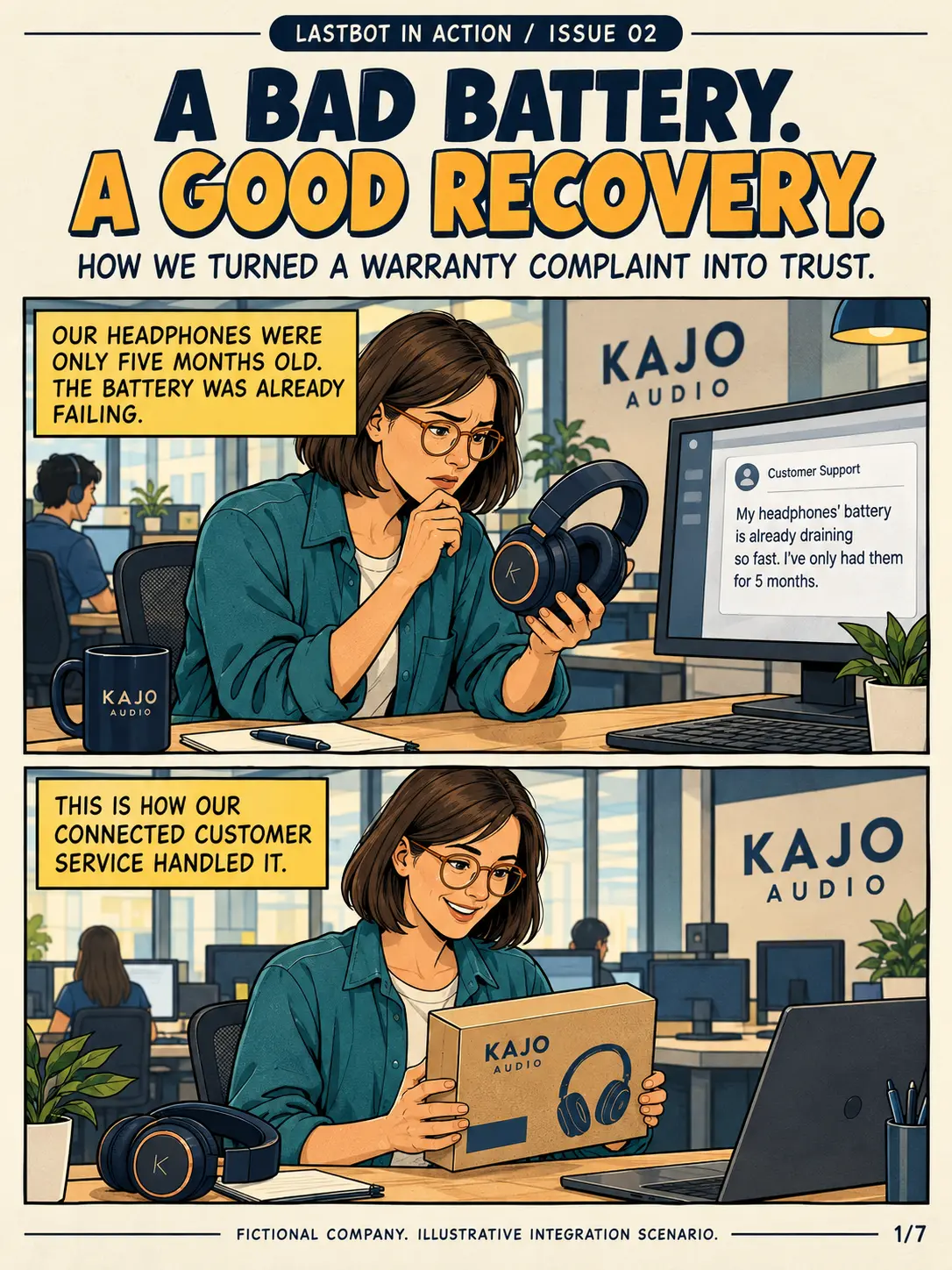
In the second issue of our LastBot in Action comic, we follow Kajo Audio, a fictional headphone company, through one very ordinary complaint: a customer whose five-month-old headphones barely hold a charge. The story is short. The lesson is not.
The product let them down. The response did not.
Page 1: A bad battery
The message is the kind every support team sees daily: "My headphones' battery is already draining so fast. I've only had them for 5 months." A traditional chatbot would reply with a link to the warranty page and a form. The customer would then wait days for someone to read it.
Page 2: First, understand the complaint
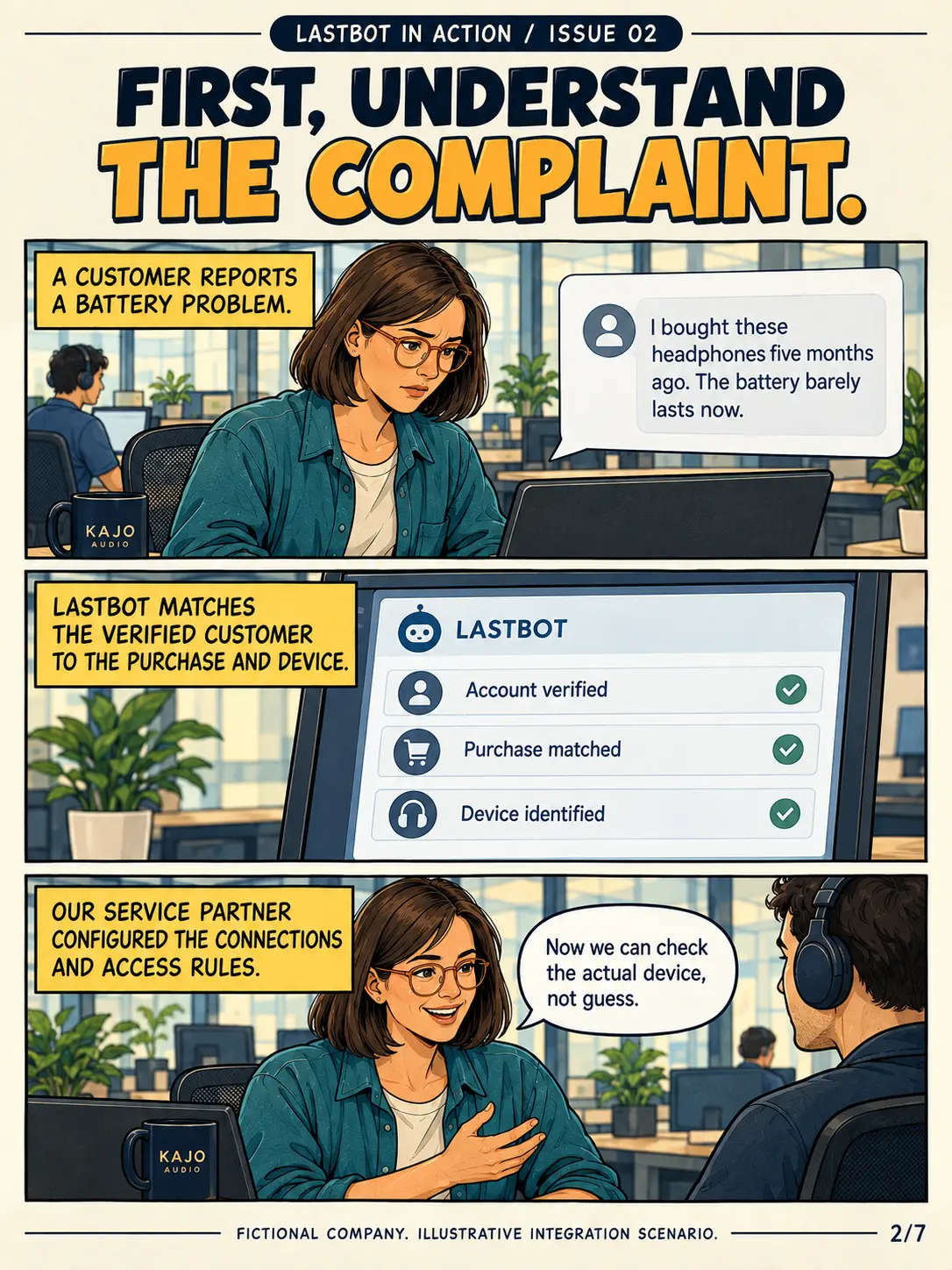
Before saying anything clever, LastBot does three unglamorous things: it verifies the customer, matches the purchase, and identifies the exact device. Kajo's service partner configured those connections and access rules once. From then on the team can check the actual device, not guess.
Page 3: The backend checks the facts
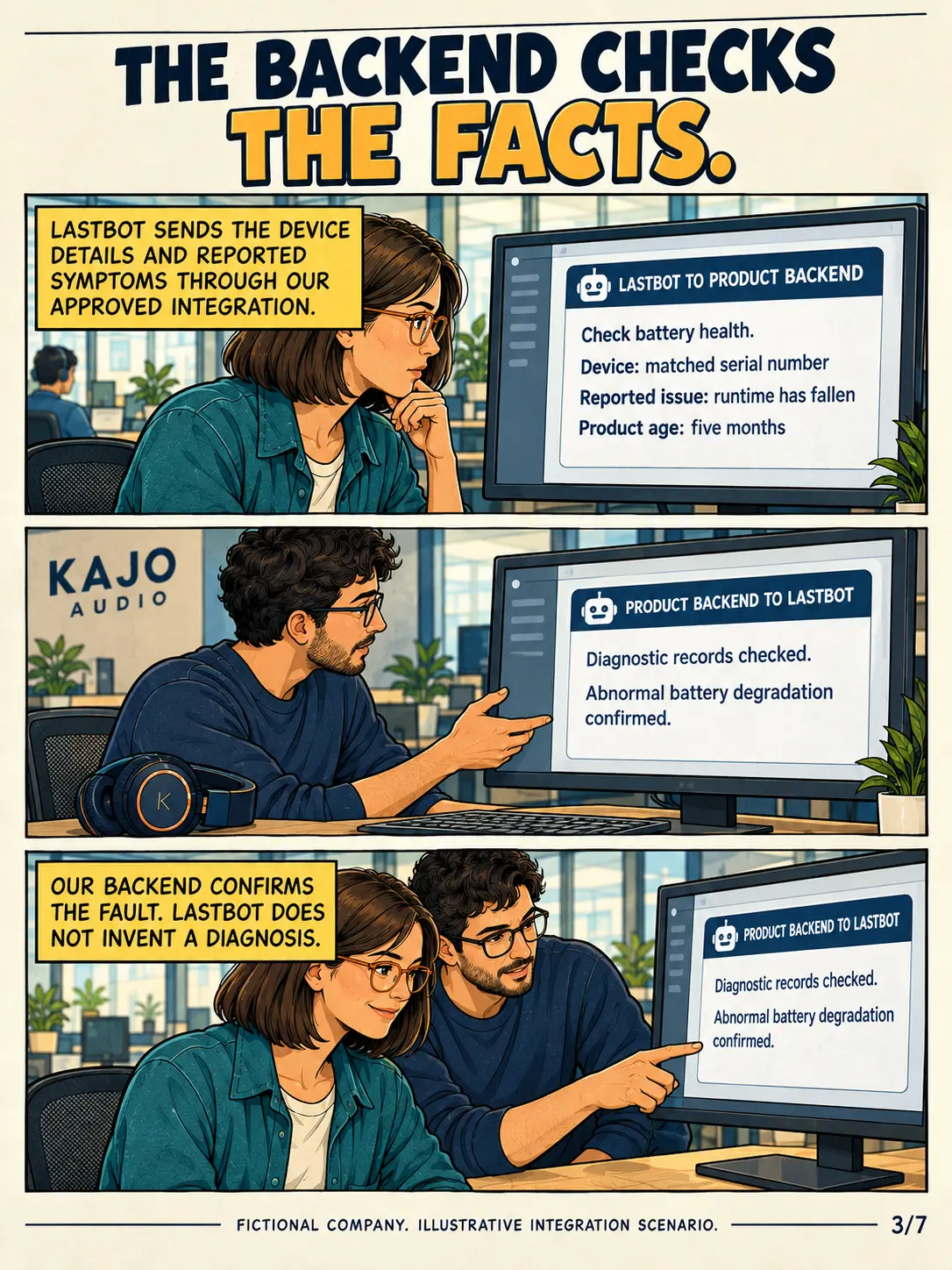
LastBot sends the serial number, reported symptom and product age to Kajo's product backend through an approved integration. The backend checks its diagnostic records and confirms abnormal battery degradation. The important part: the backend confirms the fault. LastBot does not invent a diagnosis.
Page 4: The CRM checks the warranty
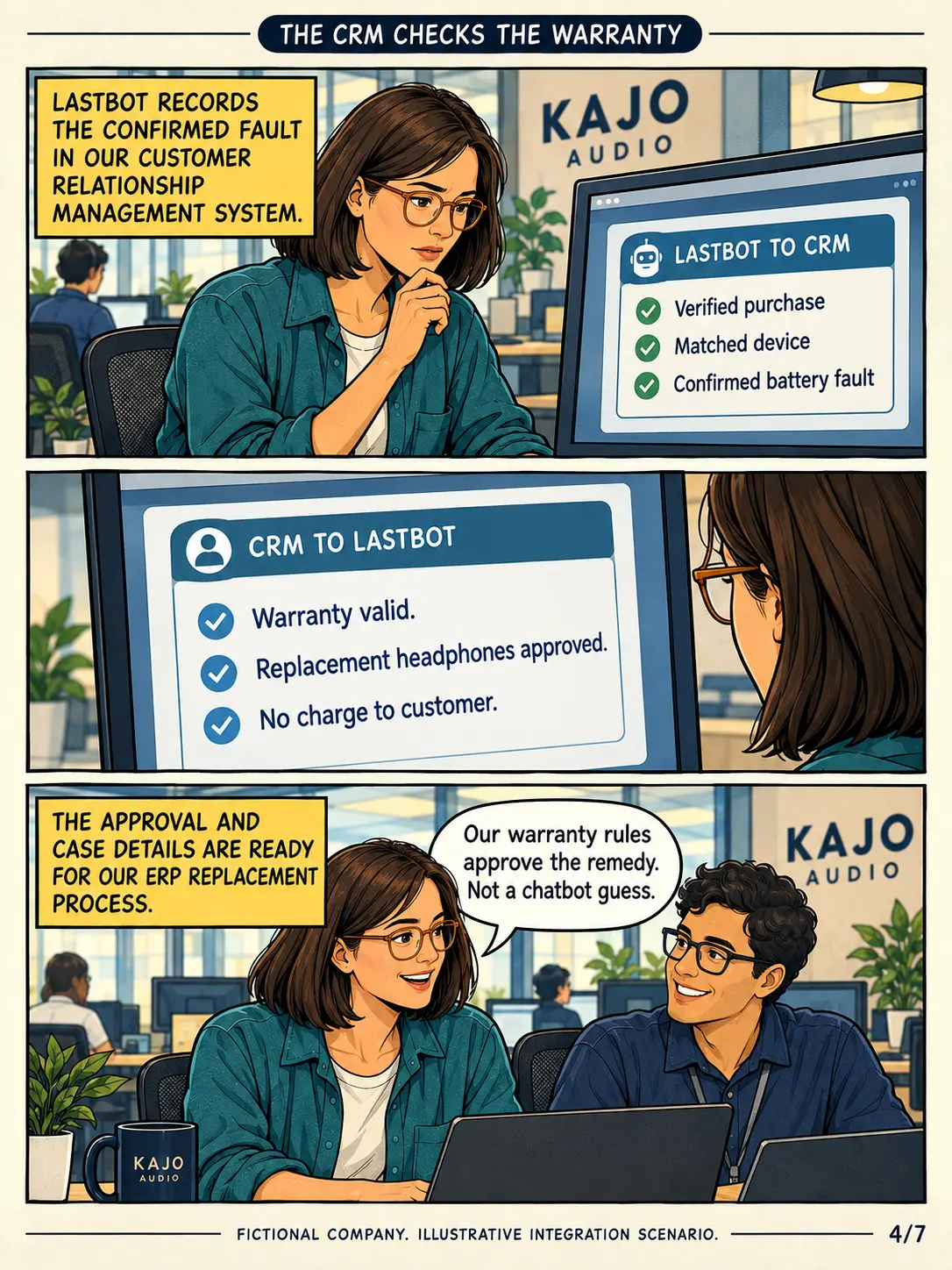
The confirmed fault is recorded in the customer relationship management system. The CRM applies Kajo's own warranty rules: warranty valid, replacement approved, no charge to the customer. The remedy comes from company policy, not from a chatbot guess.
Page 5: Now the ERP does the work
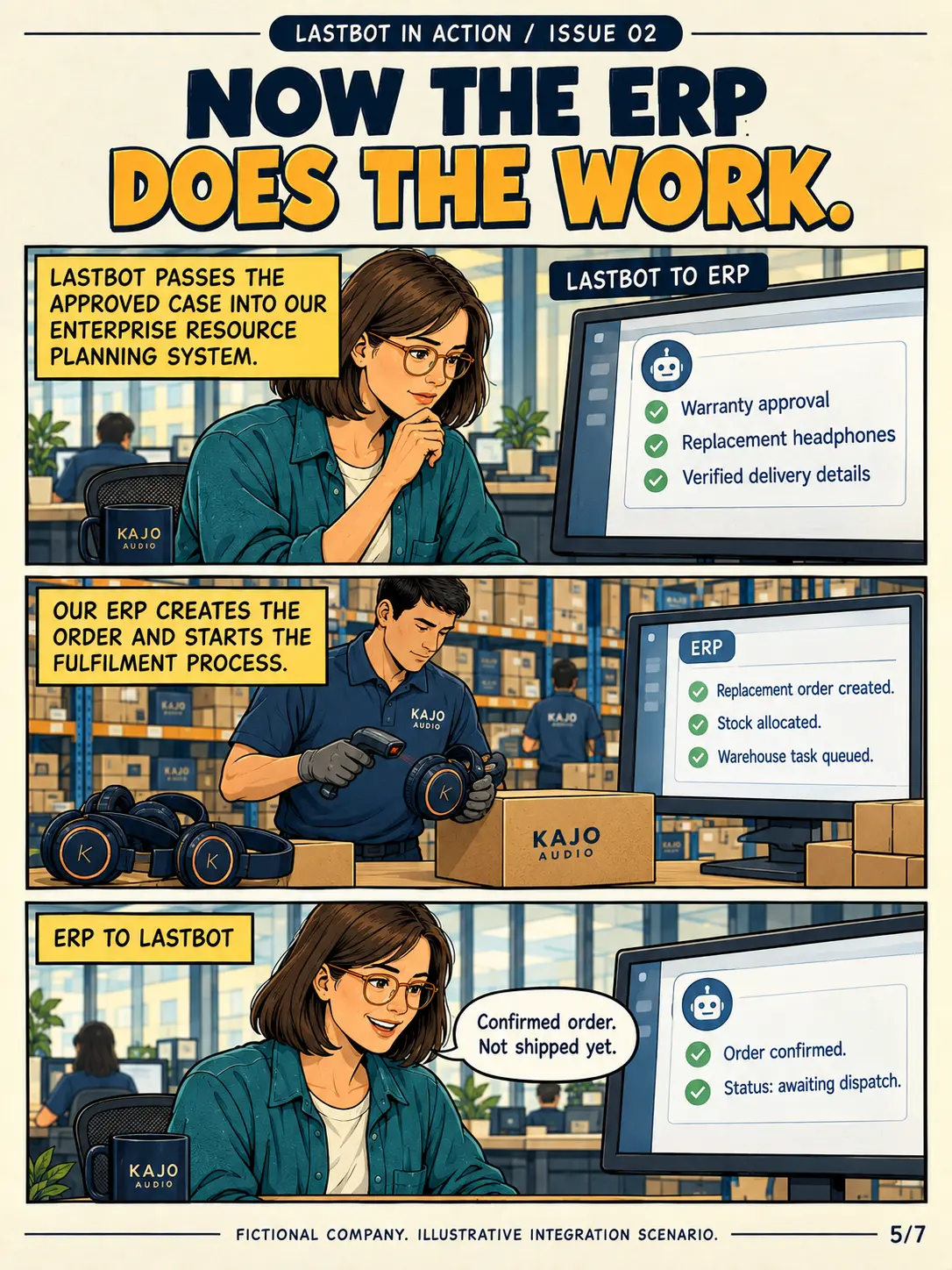
The approved case moves into the ERP. It creates the replacement order, allocates stock and queues the warehouse task. The ERP then reports back honestly: order confirmed, awaiting dispatch. Not shipped yet, and LastBot will not pretend otherwise.
Page 6: A real answer
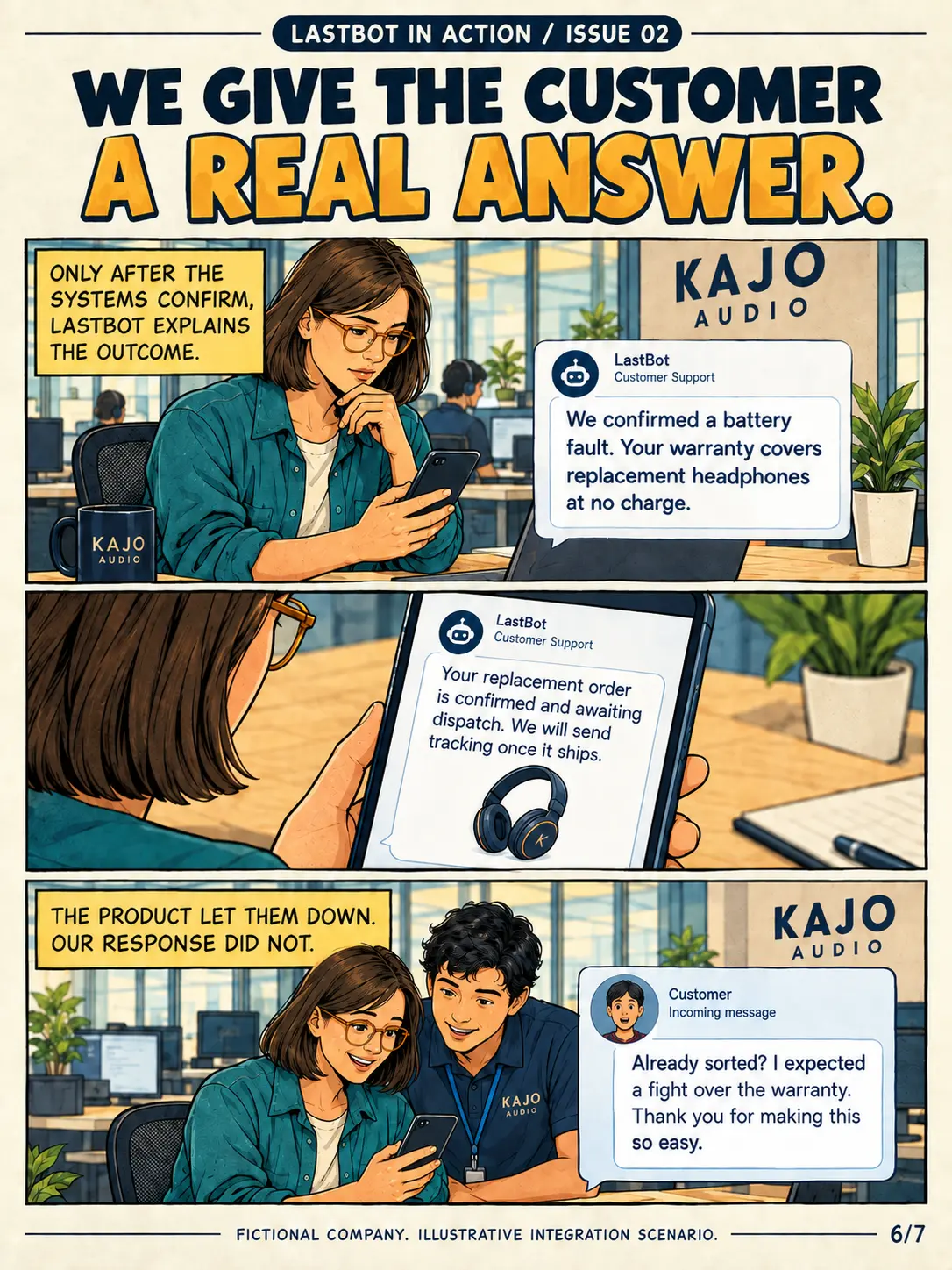
Only after every system has confirmed does LastBot explain the outcome to the customer: the battery fault is confirmed, the warranty covers a free replacement, and tracking will follow once it ships. The customer's reply says it all: "Already sorted? I expected a fight over the warranty."
Page 7: The service held up
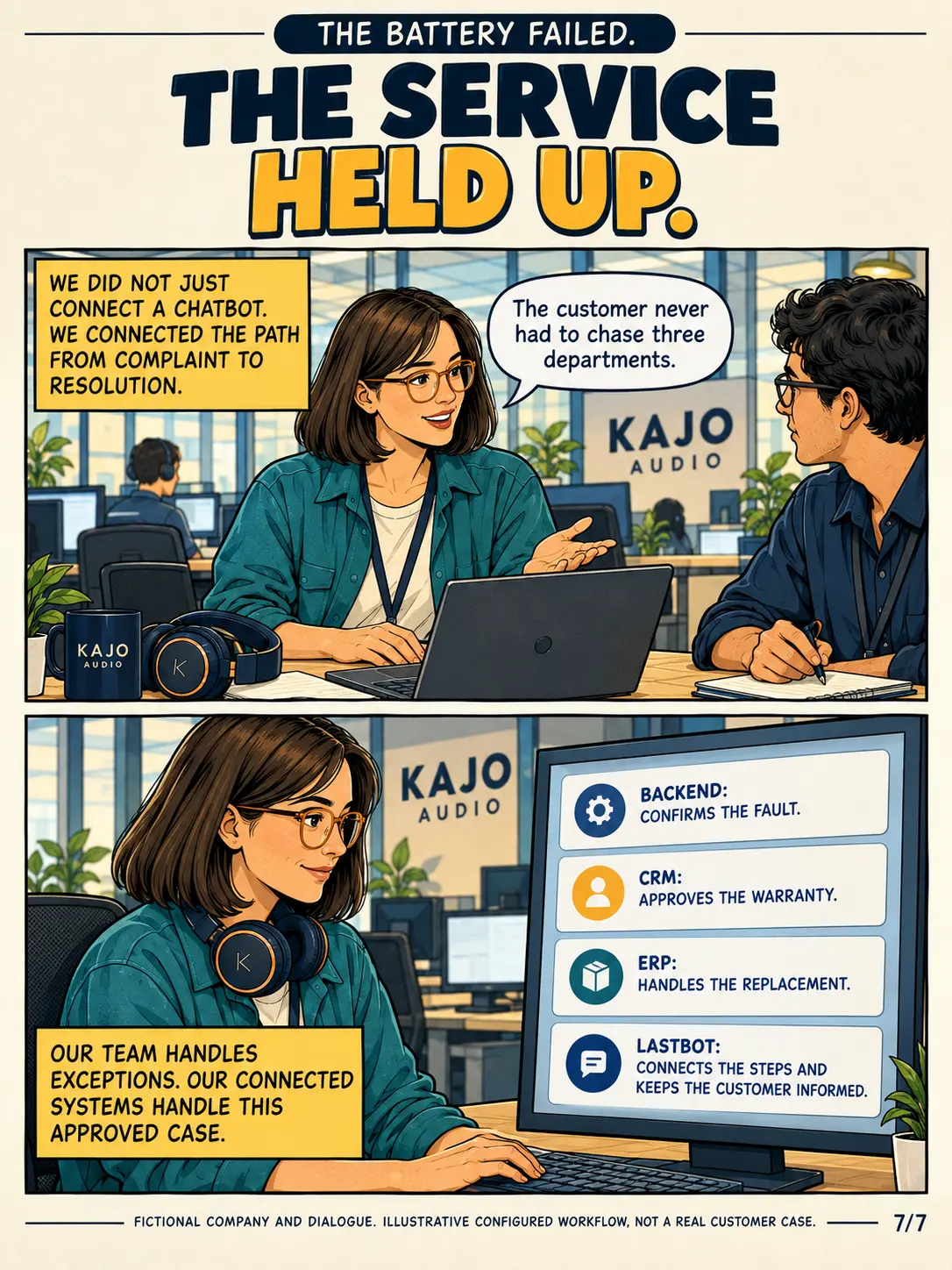
Kajo did not just connect a chatbot. They connected the path from complaint to resolution:
The customer never had to chase three departments. The team still handles the exceptions, while the connected systems handle the approved, routine cases.
Why this matters
Most AI customer service fails at exactly this point. It can talk, but it cannot check anything, so it either deflects or makes things up. Grounding every answer in your own systems changes the conversation from "please fill in this form" to "it's already sorted".
You do not need a developer team to get there. Connections like these are set up with our REST API connector, and the full list of supported systems lives on our integrations page. If you want a partner to configure the access rules for you, see our partners, or read how the platform works on LastBot ONE.
Kajo Audio and its dialogue are fictional. The comic shows an illustrative configured workflow, not a real customer case.