From Workflow-Based Bots to Intent-Based Bots
By LastBot Team
For years, customer service bots were built around workflows: predefined paths, fixed steps and carefully mapped decision trees. They worked well when customer questions followed a predictable pattern. But real conversations rarely do.
Customers do not think in flows. They describe what they need in their own words, switch topics, ask follow-up questions and expect the bot to understand the goal behind the message. That is where intent-based bots change the experience.
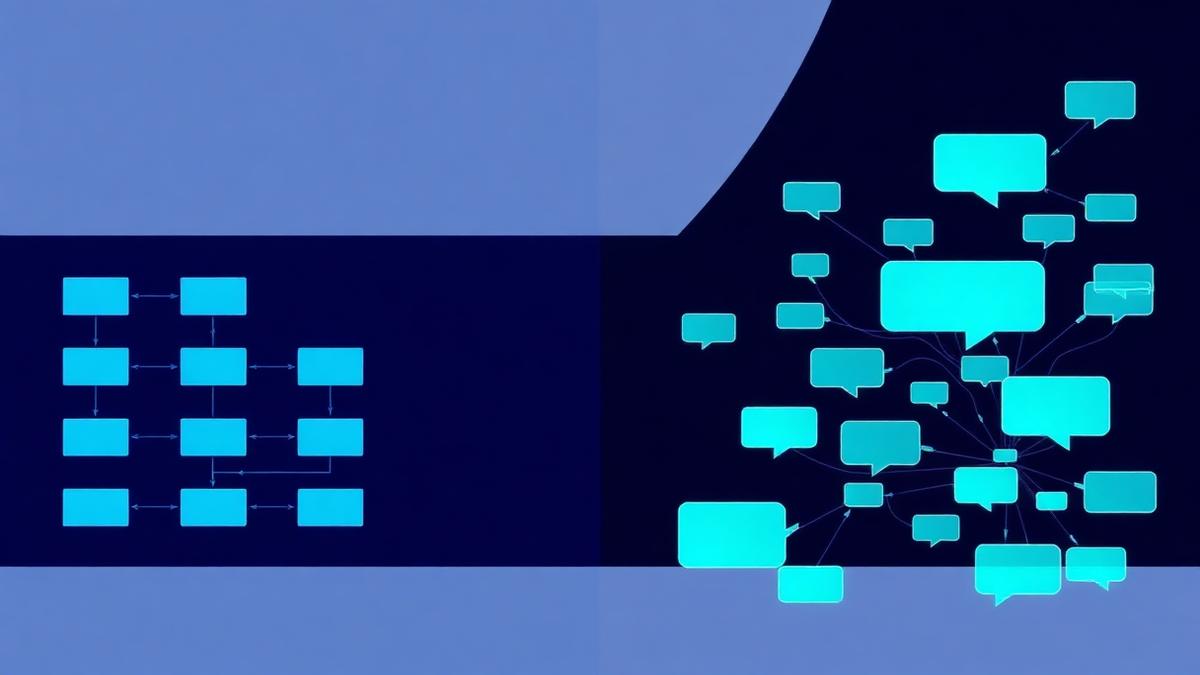
A workflow-based bot starts from the process. An intent-based bot starts from the customer's goal.
What Workflow-Based Bots Do Well
Workflow-based bots guide users through a sequence of steps. They are useful for simple, repeatable tasks such as collecting contact details, checking order status or routing a customer to the right team.
The limitation is that the customer often has to adapt to the bot. If their question does not match the expected path, the conversation can become rigid. The bot may ask unnecessary questions, miss context or send the customer back to the beginning.
In practice, workflow-based bots are strongest when the task is narrow and the answer is known in advance.
What Intent-Based Bots Do Differently
Intent-based bots focus on understanding what the customer is trying to achieve. Instead of forcing every conversation into a fixed path, the bot identifies the customer's intent and responds with the right role, knowledge and action.
This makes the experience more natural. A customer can ask a question in many different ways, add context, change direction or combine topics in one message. The bot can still understand the purpose of the conversation and continue from there.
Intent-based bots are not just more flexible. They are easier to expand. Instead of designing a new workflow for every possible path, companies can define the intents the bot should handle and the roles it should perform. That is how LastBot ONE handles inbound conversations across chat, email, WhatsApp and voice.
The Difference in Practice
A workflow-based bot might ask:
"Do you want help with billing, delivery or returns?"
An intent-based bot can understand:
"I was charged twice and I still haven't received my order."
The second message contains multiple signals: billing, delivery and urgency. A workflow-based bot may struggle because the customer did not choose one clean path. An intent-based bot can recognize the actual problem and handle the conversation more intelligently. You can see the pattern in real industry scenarios on our use cases.
Why This Matters for Customer Experience
Customers contact support because they want something solved. The less they need to learn how the bot works, the better the experience feels.
Intent-based bots reduce friction because they let customers speak naturally. They also help support teams because fewer conversations get stuck in the wrong path. The bot can handle broader questions, collect better context and escalate more clearly when a human is needed.
Workflows Still Have a Place
This does not mean workflows are obsolete. Some tasks still benefit from structure, especially when the company needs exact information in a specific order.
The difference is where the structure lives. In an intent-based bot, workflows become tools the bot can use when needed, instead of becoming the entire conversation model. Backend systems, CRMs and order lookups are wired in through integrations and called when the intent requires them.
The Shift
The move from workflow-based bots to intent-based bots is a shift from controlling conversations to understanding them.
Workflow-based bots ask customers to follow the system. Intent-based bots let the system follow the customer's need.
That is the direction modern customer service is moving: bots that are easier to talk to, easier to maintain and better aligned with how people actually ask for help.