AI and European Sovereignty
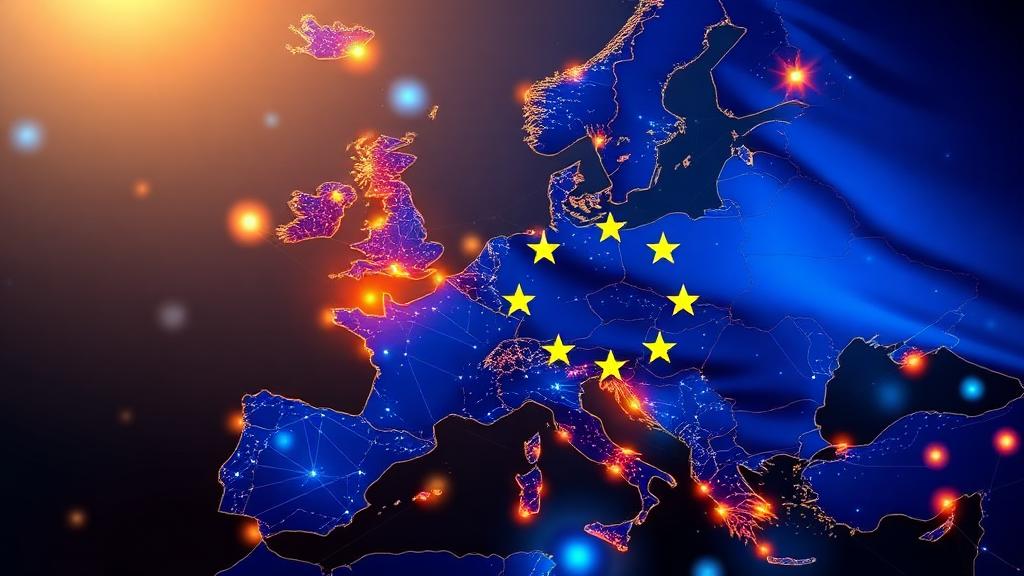
European digital sovereignty in ICT will not be decided in conferences or strategy papers. It will be decided in the everyday, messy reality of how we actually build and run our digital services.
Why sovereignty really matters
When people talk about "digital sovereignty", it can sound abstract. In practice, it is simple: do we in Europe control our own digital infrastructure, our data, our models and our deployment choices, or are we just renting them from a handful of foreign platforms that can change the rules overnight?
If you run a contact centre, a bank, an online store or a public service, you already feel this tension. A policy change on one cloud platform, a pricing update or a new usage restriction can suddenly put something critical in your stack at risk. That is not sovereignty. That is dependence dressed up with a nice dashboard.
For customer service, where AI now touches almost every interaction, this is not a theoretical debate. It is business continuity, trust and long term competitiveness.
How we think about this at LastBot
When we started LastBot, we made one deliberate decision: we would not build our future on a single magic model.
Today, we run 15 different large language models in our platform. Each has strengths and weaknesses. Some are great at multilingual support, some excel at structured reasoning, some are fast and cost efficient, some are perfect for very specific tasks. Our orchestration layer picks the right model for the job, per use case and per customer.
In plain terms this means:
We see this as a very European way to build AI infrastructure: pragmatic, modular and deeply sceptical of single points of failure.
Yes, we use the best, including Google Gemini
Sovereignty does not mean refusing to use the best tools in the world.
Right now, Google Gemini is our top performer for many demanding tasks. It is very strong in complex reasoning, long context and truly multilingual customer service. For a pan European operation, that matters. If you are serving customers in Finnish, German, French and Spanish on the same day, you want something that can keep up.
But Gemini is first among equals in our stack, not our entire strategy. We treat it as one excellent component, not as our identity. If something better comes along for a particular use case, or if a customer needs to avoid a specific jurisdiction, we have options.
That is the key word: options.
Hybrid and on premise, sovereignty in practice
There is another side to this conversation that often gets glossed over.
Putting a sticker on a website that says "EU data centre" is not the same thing as sovereignty. For many organisations, especially in the public sector, healthcare and finance, the real questions are very concrete:
This is why we have built LastBot to support a hybrid architecture. Some workloads can run on large models in the cloud. Others can run on open source models deployed on premise or in a sovereign cloud environment. The routing happens under the hood, but the control stays with the customer.
You get modern AI in your contact centres without having to choose between performance and compliance.
The rise of models like Kimi K2.5
One of the most exciting developments in the last year has been the rapid rise of strong alternatives to the big two providers in the United States.
Kimi K2.5 is a good example. It is not a toy. It handles long context, vision and complex tasks to a level that in many scenarios is not far from what we see from the very best models from OpenAI and Google Gemini. For certain use cases, especially when combined with good prompt design and domain specific tuning, it is already close enough that the gap does not matter in practice.
For European sovereignty, this is a big deal.
If models like Kimi K2.5, and others that will follow, can be deployed in more controlled environments or under licensing terms that fit European requirements, they become a real counterweight to the current duopoly. They give us more room to negotiate, more architectural flexibility and more ways to align AI with our own rules and values.
Where this leaves Europe and LastBot
Europe will not win digital sovereignty by passing one more regulation or by waiting for a single perfect European model to appear.
We will win it by:
At LastBot, we are trying to do our part in a very concrete corner of this puzzle: the conversations businesses have with their customers. If we can ensure that those conversations are powered by flexible, multi model, sovereignty aware infrastructure, then we have taken one small but meaningful step away from dependency and towards real choice.
That, to me, is what European sovereignty in ICT should feel like: not slogans, but the quiet confidence that you can always change your mind, and your model, without breaking everything.
---
Janne Timonen
CEO, LastBot